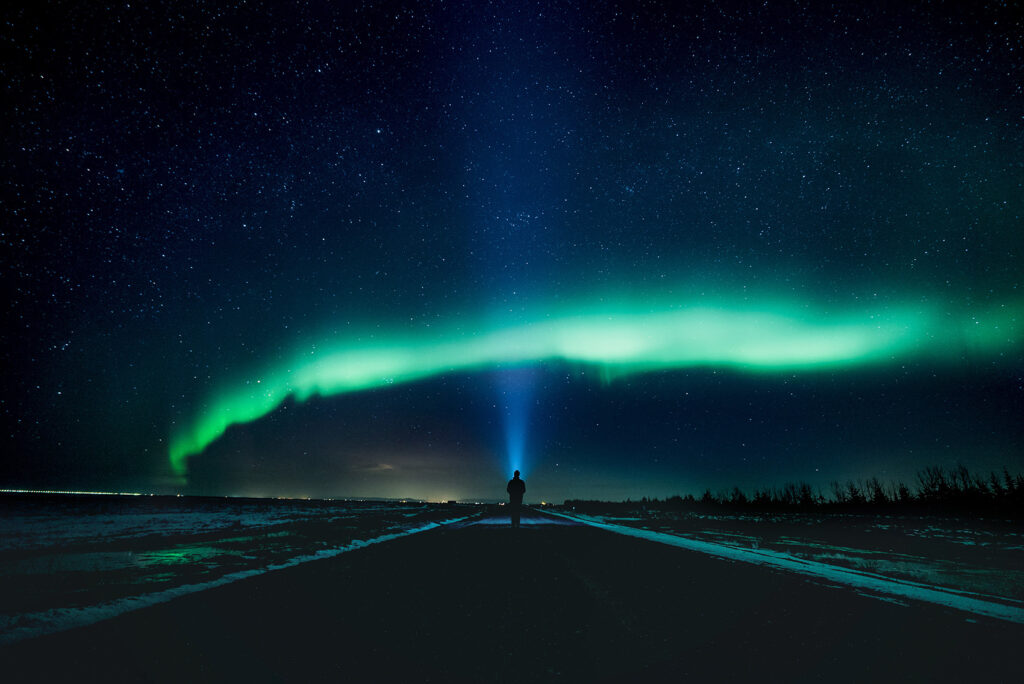
It's high season for northern lights! Our sun hasn't been this active for a long time. On top of that, it's high season for tourists in Northern Norway, and all tourism destinations in Northern Norway are fully booked.
But it's also high season for experiencing space, without the Northern Lights! Internationally, we are seeing an increased interest in concepts such as Dark Sky, noctourism, darkcation, astrotourism and star tourism. In Norway, too, we're seeing growing interest, especially in Finnmark, which recently opened Norway's first Dark Sky Park in Øvre Pasvik National Park.
- Star tourism is about to become big (nrk.no, 17 July 2024)
- Star tourism (Norwegian Experience Conference, 29 October 2024)
- Noctourism (nrk.no, 22 January 2025)
While those living in Northern Norway may take the Northern Lights for granted, those of us in Northern and Southern Norway often take the starry sky for granted. Most people live in or near large cities. In many parts of the world, cities are so close together that many people have grown up without ever seeing stars. The experiences are therefore queued up from the moment they land in Norway, because even in the most light-polluted Norwegian city, many tourists see stars for the first time in their lives.
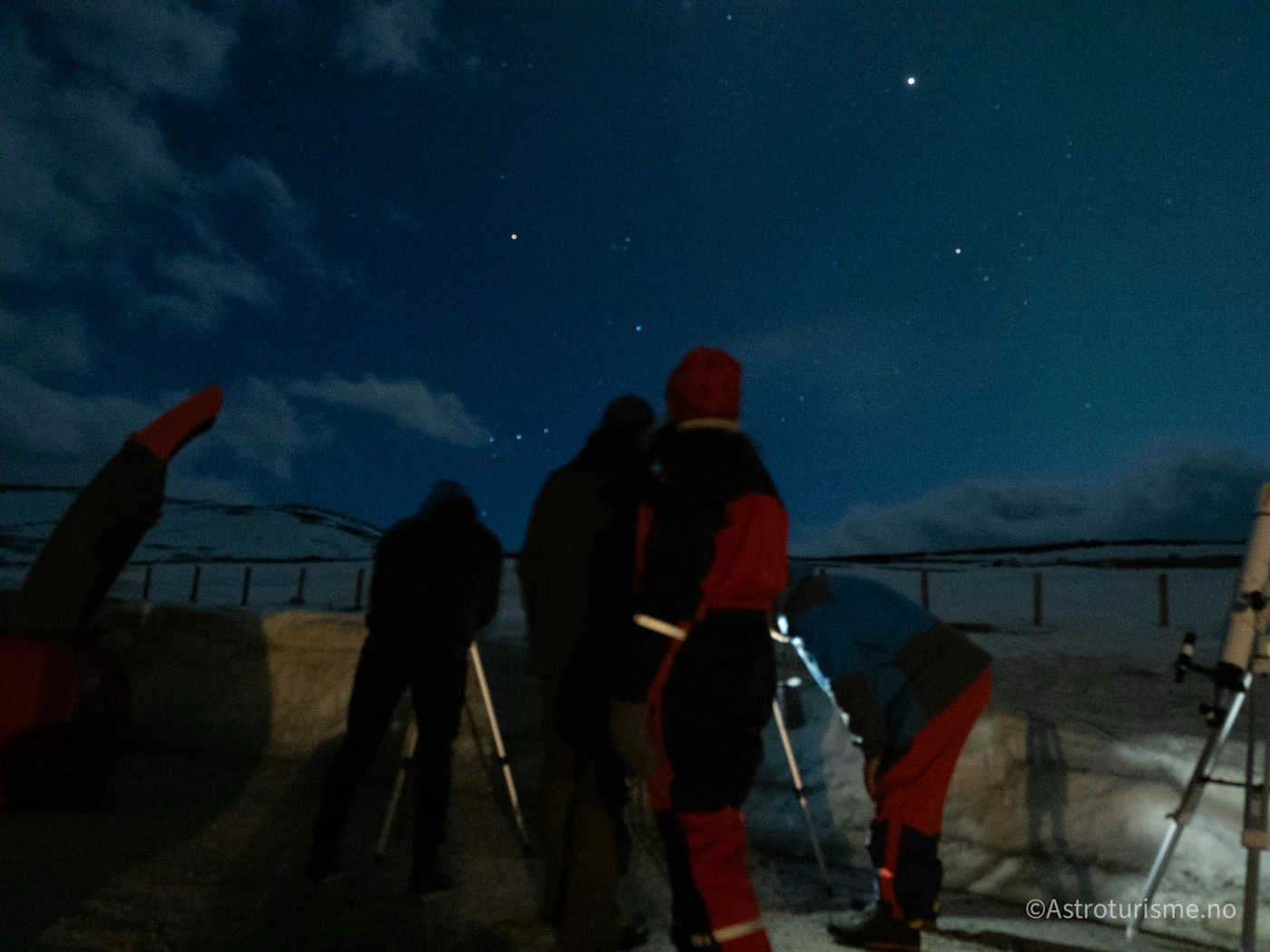
The winter of 2025 has been special in terms of available celestial phenomena! In early autumn we had a visit from a comet - if you're in a place without much light pollution, maybe you saw it at dusk? In January, all the major planets lined up so that anyone could go out and see them with their own eyes, or through a telescope.
But that's pretty much how it is every winter. Planets move, comets come and go, but the moon, the Andromeda galaxy, the Pleiades and the Orion Nebula create a spectacular astro-show in the sky every clear night.
Astrotourism is a new concept in Norway, but internationally it is the big brother of Northern Lights tourism. Nevertheless, we can learn from aurora tourism when we prepare for the arrival of astrotourism's big brother in Norway. From being a little-known phenomenon, only available to those who grew up in Norway-Norway, Northern Lights tourism has become one of the biggest concepts in tourism. It was particularly interesting to see Innovation Norway using astronomical figures for the growth that has taken place in aurora tourism, even as recently as 2024 (download report here).
Norway has, if possible, the best access to natural darkness, since we have large areas of land where few people live, and consequently there is little light pollution. Internationally, it is precisely in the small windswept and remote countries, such as Ireland, that astrotourism has worked best. Tourism hosts who learn to tell the stories behind the stories, who take their guests to the dark place a little way from the hotel building, are able to give their guests experiences they have never seen before or imagined they would experience.
Now you're probably thinking: But can I talk about space in a credible way? I don't even know the names of all the planets!
Fortunately, the solution is closer than you think. In the 1950s, the University of Oslo built a research centre for solar physics and satellite orbits, the Solar Observatory at Harestua, which has been responsible for a number of breakthroughs in international research and shaped our knowledge of space. It has also been here, at Harestua, that Norway has developed some of its brightest minds, astrophysicists who in the post-war period have contributed to innovation and research in many areas of society in recent decades.
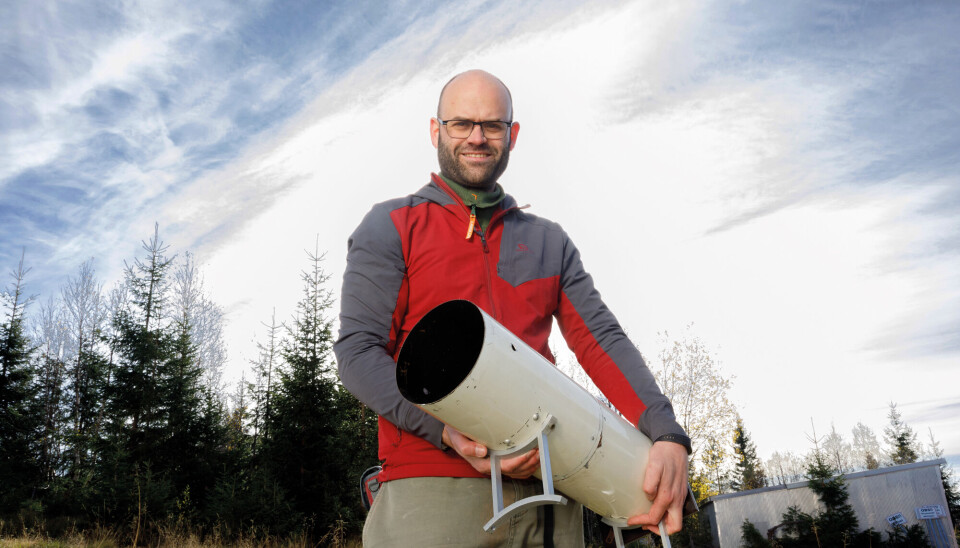
Since the 1980s, the Solar Observatory has been a visitor and communication centre for astrotourism. The Solar Observatory has now gathered all its expertise in the field and developed a series of courses for Norwegian tourism companies that want to learn the art of astrotourism. Astroguide.
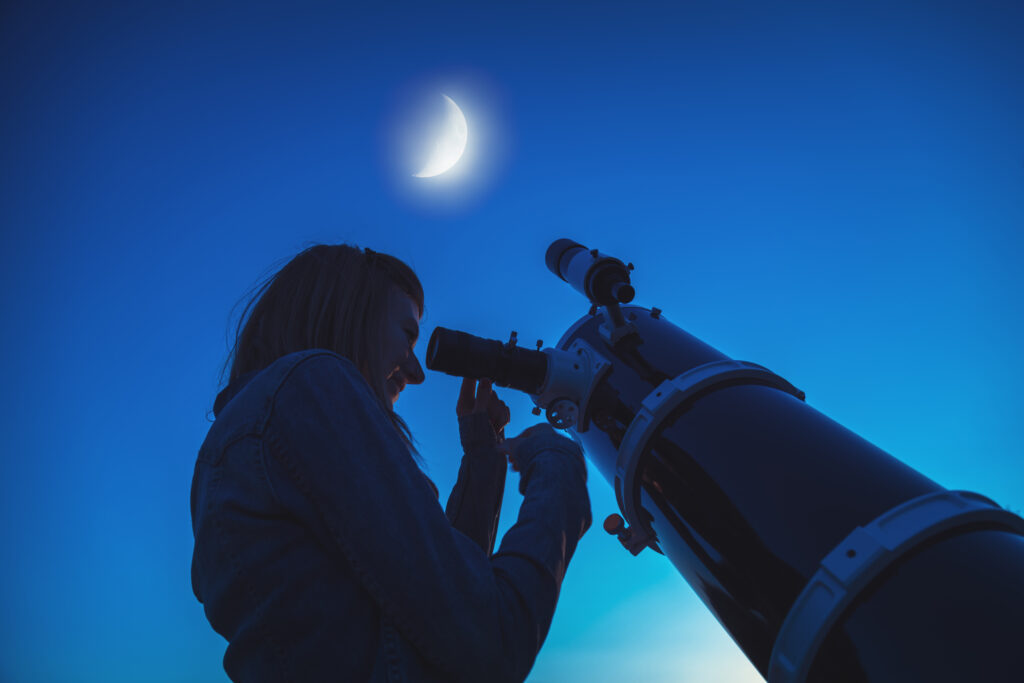
Astrotourism is coming to Norway, and we have everything we need to give our guests a great experience.
We HAVE access to the sea and the beautiful mountain landscape.
We HAVE access to gastronomy.
We HAVE the unique accommodation spaces.
We HAVE a rare and unique access to the starry sky!
...and we have access to the knowledge and communication skills to let our guests experience space!
And we encourage you to get curious and get in touch for more information about the Solar Observatory courses.
The tourism operators who have seen this coming before are already marketing their dark and natural surroundings. The first Astroguide courses offered by the Solar Observatory are already fully booked! And unlike northern light tourism, astrotourism is not geographically limited to the north, where everyone is equally well placed to take part in the development.